Colonial Shadows and Digital Era: Reforming the Arbitrary and Draconian Justice System of Pakistan
DOI:
https://doi.org/10.64060/IJLLA.v1i2.5Keywords:
Colonial Legacy, Criminal Justice Reform, Comparative Law, Digital Justice, Miranda RightsAbstract
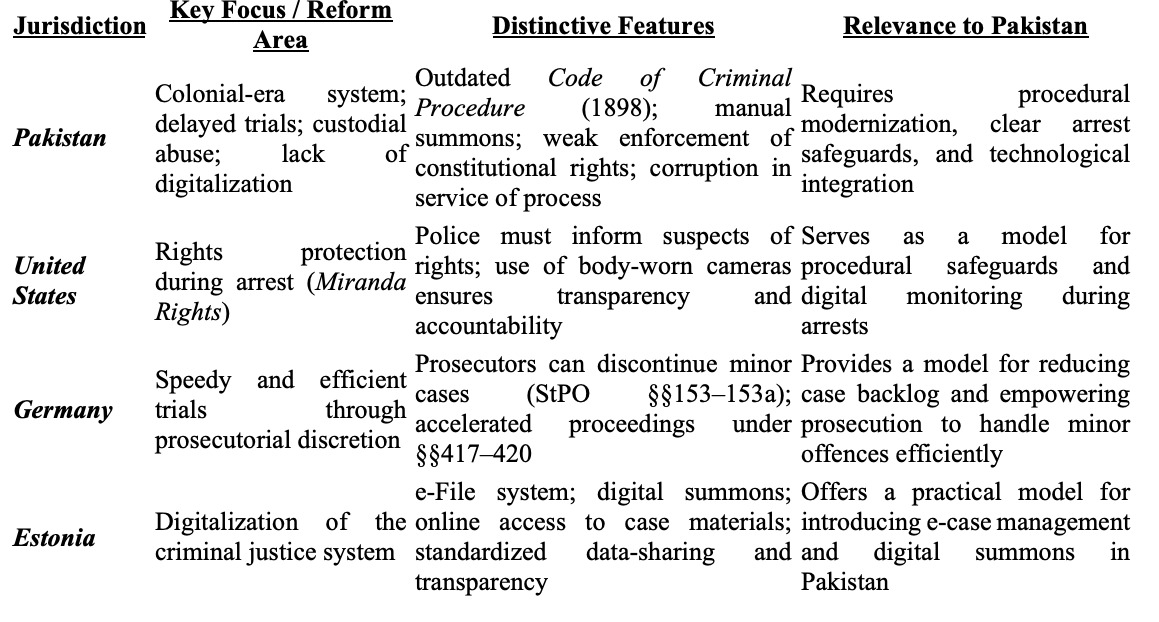
The criminal justice system of Pakistan is still heavily shaped by laws and procedures left behind from colonial times. These outdated systems often stand in the way of fair and timely justice. For example, old methods like using postal court summons, ignoring basic rights during arrests (like Miranda rights), continued use of torture to get confessions, and prolonged trials all violate fundamental human rights and weaken public trust in the system. This study looks into how these colonial legacies still affect the criminal justice system of Pakistan. It also explores how new technologies could help reform the system, considering the current economic conditions, without sacrificing fairness or ethical standards. The study also looks at how tools like digital summons, better surveillance and accountability of law enforcement agencies, and modern case management systems could improve transparency, trust, and efficiency in the criminal justice process. Seeking inspiration from jurisdictions like the United States in ensuring Miranda Rights, Germany in speedy trials, and most digitalized criminal justice systems, such as Estonia, offers a promising path toward meaningful reform. The study contributes to the literature by proposing a rights-based, technology-oriented framework for reform that aligns with Pakistan’s socio-economic realities while addressing the structural legacies of colonial law.
Downloads
Downloads
Published
Issue
Section
License
Copyright (c) 2025 International Journal of Law and Legal Advancement

This work is licensed under a Creative Commons Attribution 4.0 International License.
How to Cite