
The Exact Analysis of Augmented Incomplete Latin Square Design with One Missing Observation
DOI:
https://doi.org/10.64060/JASR.v1.i2.4Keywords:
Augmented Design; Experimental Design, Latin Square, Incomplete Latin Square, One Missing, Empirical Type I ErrorAbstract
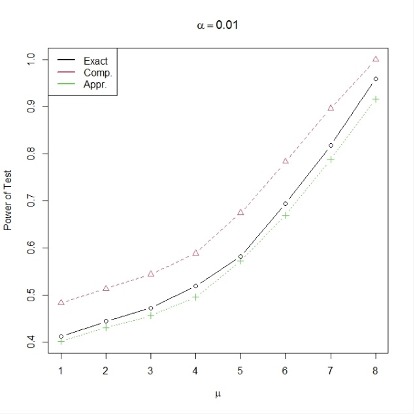
As Federer's augmented Latin square design (ALSD) is one of the most important augmented designs used in plant breeding programs, this paper aims to introduce an exact analysis for an ALSD with a missing check treatment. Namely, the novelty of this present work is evident in proposing and defining the augmented incomplete Latin square design (AILSD). In this light, the effects of rows, columns, checks, and new treatments were evaluated. All previous known studies were limited by focusing on dealing with complete datasets, paying less attention to the problem of the presence of a missing value, and this is the gap we are trying to fill here. Moreover, computing the regression sum of squares (RSS) for both full and reduced models was essential to figure out the other needed sum of squares. A numerical example and R simulation study were carried out to assess the performance of the proposed design. The importance of employing R comes from filling the calculation gaps involved in analysing AILSD.
References
[1] Ai, M., Li, K., Liu. S. and Lin, D. (2013). “Balanced incomplete Latin square designs”, Journal of Statistical Planning and Inference, 143(9), 1575-1582.
[2] Anchang, M. M., Berebon, D. P. and Okafor, G. I. (2025). “Production and optimization of probiotic-enriched breakfast cereals: A mixture augmented design approach”, Food and Humanity, 4, 100508.
[3] Brenda, Y. M. and Oladugba, A. V. (2024). “Robustness of Augmented Third-order Response Surfaces Designs to Missing Observation”, Journal of the Iranian Statistical Society, 23(1), 33-49.
[4] Burgueño, J., Crossa, J., Rodríguez, F. and Yeater, K. M. (2018). “Augmented designs-experimental designs in which all treatments are not replicated”, Applied Statistics in Agricultural, Biological, and En-vironmental Sciences, Barry Glaz and Kathleen M. Yeater: editors, Chapter 13, 345-370. https://doi.org/10.2134/appliedstatistics.2016.0005.c13
[5] Ezievuo, C. S., Oladugba, A. V. and Babatunde, O. T. (2025). “Evaluation of orthogonal composite designs for second‐order model in presence of missing observation”, Quality and Reliability Engineering International, 41(1), 204-234.
[6] Federer, W.T. (1956). “Augmented (or hoonuiaku) designs”, Biometrics Unit Technical Reports, 55, 191–208. https://doi.org/10.2307/2529707
[7] Federer, W., Nair, R. and Raghavarao, D. (1975). “Some augmented row-column designs”, Biometrics, 31, 361-373. https://doi.org/10.2307/2529426
[8] Federer, W. T. and Raghavarao, D. (1975). “On augmented designs”, Biometrics, 31, 29- 35. https://doi.org/10.2307/2529707
[9] Federer, W. T. and Wolfinger, R. D. (2003). “Augmented row–column design and trend anal-yses”, Handbook of formulas and software for plant geneticists and breeders, 291- 295.
[10] Federer, W.T. (1961). “Augmented designs with one-way elimination of heterogeneity”, Biometrics, 17(3), 447-473. https://doi.org/10.2307/2527837
[11] Federer, W.T. (1998a). “Recovery of interblock, intergradient, and intervariety information in incom-plete block and lattice rectangle designed experiments”, Biometrics, 54, 471-481. https://doi.org/10.2307/3109756
[12] Federer, W.T. (1998b). “A simple procedure for constructing resolvable row-column experiment de-signs”, BU-1438-M in the Technical Report Series of the Department of Biometrics, Cornell University, Ithaca, NY. https://ecommons.cornell.edu/handle/1813/32036
[13] Federer, W.T. (2002). “Construction and analysis of an augmented lattice square design”, Biometrical Journal: Journal of Mathematical Methods in Biosciences, 44(2), 251-257. https://doi.org/10.1002/1521-4036(200203)44:2%3C251::AID-BIMJ251%3E3.0.CO;2-N
[14] Federer, W.T. (2003). “Analysis for an experiment designed as augmented lattice square de-sign”, Handbook of Formulas and Software for Plant Geneticists and Breeders, 283-289.
[15] Federer, W.T. and Crossa, J. (2012). “I.4 screening experimental designs for quantitative trait loci, association mapping, genotype-by environment interaction, and other investigations”, Frontiers in Physi-ology, 3, 1–9. https://doi.org/10.3389/fphys.2012.00156
[16] Federer, W. T. and King, F. (2007). “Variations on split plot and split block experiment de-signs”, (Volume 654), John Wiley & Sons.
[17] Fisher, R.A. (1925). “Statistical methods for research workers”, Edinburg, Oliver and Boyd, Auflage.
[18] Gokul, A. R. and Pachamuthu, M. (2025). “Assessing the predictive resilience of composite experi-mental designs under missing observations: the influence of α alpha value variations”, Reliability: Theory and Applications, 20(2(84)), 518-534.
[19] Mandal, B. and S. Dash (2017). “On balanced incomplete Latin square designs”, Communications in Statistics-Theory and Methods, 46(13), 6258-6263.
[20] Montgomery, D.C. (2017). “Design and analysis of experiments”, John Wiley & sons.
[21] Müller, B. U., Schützenmeister, A. and Piepho, H. P. (2010). “Arrangement of check plots in aug-mented block designs when spatial analysis is used”, Plant breeding, 129(6), 581-589. https://doi.org/10.1111/j.1439-0523.2010.01803.x
[22] Ott, N.c. and Longnecker, M.T. (2015). “An introduction to statistical methods and data analysis”, 7th Edition, Cengage Learning.
[23] Piepho, H.P. and Williams, E.R. (2016). “Augmented row–column designs for a small number of checks”, Agronomy Journal, 108(6), 2256-2262. https://doi.org/10.2134/agronj2016.06.0325
[24] Sandborn, M., Olea, C., Said, A., Shabir, M., Volgyesi, P., Koutsoukos, X. and White, J. (2024). “Towards AI-augmented design space exploration pipelines for UAVs”, In book: Artificial Intelligence: Machine Learning, Convolutional Neural Networks and Large Language Models, 1, 309-332.
[25] Sirikasemsuk, K. and K. Leerojanaprapa (2017). “One missing value problem in Latin square design of any order: Exact analysis of variance”, Cogent Engineering, 4(1), https://doi.org/10.1080/23311916.2017.1411222
[26] Sirikasemsuk, K., Wongsriya, S. and Leerojanaprapa, K. (2024). “Solving the incomplete data prob-lem in Greco-Latin square experimental design by exact-scheme analysis of variance without data imputa-tion”, AIMS mathematics, 9(12), 33551-33571.
[27] Vo-Thanh, N. and Piepho, H. P. (2020). “Augmented quasi-sudoku designs in field tri-als”, Computational Statistics and Data Analysis, 150, https://doi.org/10.1016/j.csda.2020.106988
[28] Williams, E. R. and Piepho, H. P. (2025). “A note on the construction of augmented designs in square arrays”, arXiv (preprint), 2501.08448.
[29] Wolfinger, R., Federer, W.T. and Cordero‐Brana, O. (1997). “Recovering information in augmented designs, using SAS PROC GLM and PROC MIXED”, Agronomy Journal, 89(6), 856-859. https://doi.org/10.2134/agronj1997.00021962008900060002x
[30] Zhou, C., Liu, X., Yu, C., Tao, Y. and Shao, Y. (2024). “Trust in AI-augmented design: Applying structural equation modeling to AI-augmented design acceptance”, Heliyon, 10(1).
Published
Issue
Section
License
Copyright (c) 2025 SCOPUA Journal of Applied Statistical Research

This work is licensed under a Creative Commons Attribution 4.0 International License.
How to Cite