Cubic Spherical Neutrosophic Weighted Yager and Geometric Yager Aggregation Operators with Application in Groundwater Sustainability
DOI:
https://doi.org/10.64060/ANMIV1i21Keywords:
Cubic spherical neutrosophic set, Yager’s norms, Cubic spherical neutrosophic weighted Yager aggregation operator, Cubic spherical neutrosophic weighted geometric Yager aggregation operatorAbstract
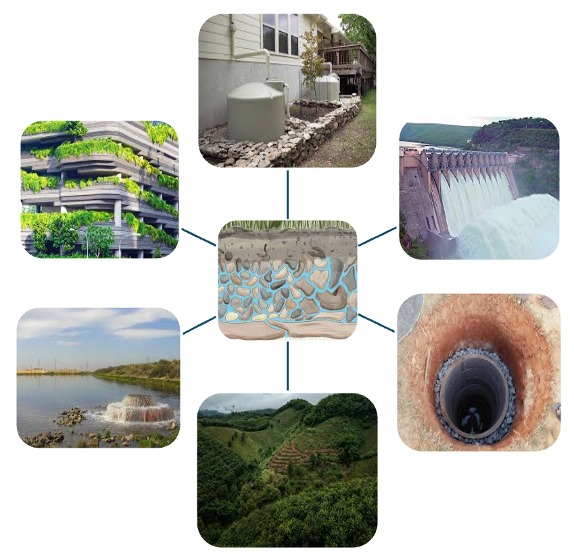
Decision-making problems involving uncertain and inconsistent information often require advanced aggregation techniques. In this paper, we propose new aggregation operators under the cubic spherical neutrosophic environment, namely the Cubic Spherical Neutrosophic Weighted Yager Aggregation Operator (CuSNWYAO) and the Cubic Spherical Neutrosophic Weighted Geometric Yager Aggregation Operator (CuSNWGYAO). These operators are developed by integrating Yager’s norms with cubic spherical neutrosophic sets (CuSNS) to effectively combine uncertain, indeterminate and inconsistent information. The mathematical properties of the proposed operators including idempotency, boundedness and monotonicity are investigated and verified. To demonstrate the applicability of the proposed approach, a multi-criteria decision-making (MCDM) model is constructed for selecting the most suitable method to enhance groundwater levels. Six groundwater restoration alternatives are evaluated based on multiple criteria such as effectiveness, cost, land requirement, technical complexity, environmental impact, and social acceptability. Expert opinions are incorporated using linguistic variables and transformed into cubic spherical neutrosophic values. The proposed aggregation operators are then applied to obtain aggregated evaluations and final rankings of the alternatives. The results show that the proposed operators provide a flexible and effective framework for handling complex decision-making problems under uncertainty. Therefore, the developed method can serve as a valuable tool for solving practical decision-making problems in environmental management and other related fields.
References
1. Akram, M., Peng, X., & Sattar, A. (2021). Multi-criteria decision-making model using complex Pythagorean fuzzy Yager aggregation operators. Arabian Journal for Science and Engineering, 46(2), 1691-1717.
2. Ali, M., & Smarandache, F. (2017). Complex neutrosophic set. Neural computing and applications, 28(7), 1817-1834.
3. Atanassov, K. T. (1999). Intuitionistic fuzzy sets. In Intuitionistic fuzzy sets: theory and applications (pp. 1-137). Heidelberg: Physica-Verlag HD.
4. Garg, H., Shahzadi, G., & Akram, M. (2020). Decision‐making analysis based on Fermatean fuzzy Yager aggregation operators with application in COVID‐19 testing facility. Mathematical problems in engineering, 2020(1), 7279027.
5. Gomathi, S., Karpagadevi, M., Krishnaprakash, S., Revathy, A., & Broumi, S. (2024). Cubic spherical neutrosophic sets for advanced decision-making. Neutrosophic Sets and Systems, 73(1), 24.
6. Gomathi, S., Kavitha, A., Ramesh, R., Karuppusamy, E., & Meenachi, L. A Machine Learning Approach Using Principal Component Analysis and Cubic Spherical Neutrosophic Sets for MCDM.
7. Gomathi, S., Krishnaprakash, S., Karpagadevi, M., & Broumi, S. (2023). Cubic Spherical Neutrosophic Sets. International Journal of Neutrosophic Science, 21(4), 172-72.
8. Khan, S., Abdullah, S., Ashraf, S., Chinram, R., & Baupradist, S. (2020). Decision support technique based on neutrosophic Yager aggregation operators: Application in solar power plant locations—Case study of Bahawalpur, Pakistan. Mathematical Problems in Engineering, 2020(1), 6677676.
9. Krishnaprakash, S., Mariappan, R., & Broumi, S. (2024). Cubic spherical neutrosophic sets and selection of electric truck using cosine similarity measure. Neutrosophic Sets and Systems, 67, 211-232.
10. Liu, P., Shahzadi, G., & Akram, M. (2020). Specific types of q-rung picture fuzzy Yager aggregation operators for decision-making. International Journal of Computational Intelligence Systems, 13(1), 1072-1091.
11. Maji, P. K., Biswas, R., & Roy, A. R. (2003). Soft set theory. Computers & mathematics with applications, 45(4-5), 555-562.
12. Molodtsov, D. (1999). Soft set theory—first results. Computers & mathematics with applications, 37(4-5), 19-31.
13. Shahzadi, G., Akram, M., & Al-Kenani, A. N. (2020). Decision-making approach under Pythagorean fuzzy Yager weighted operators. Mathematics, 8(1), 70.
14. Shukla, R. (2026). Cubic Spherical Neutrosophic Weighted Geometric Heronian Mean Operator for MCDM with Application to Fertilizer Selection. Neutrosophic Sets & Systems, 95.
15. Smarandache, F. (1998). Neutrosophy: neutrosophic probability, set, and logic: analytic synthesis & synthetic analysis.
16. Smarandache, F. (2020). The score, accuracy, and certainty functions determine a total order on the set of neutrosophic triplets (T, I, F). Infinite Study.
17. Smarandache, F. (2023). Foundation of the superhypersoft set and the fuzzy extension superhypersoft set: A new vision. Neutrosophic systems with applications, 11, 48-51.
18. Smarandache, F., Kalins, B., Anandakumar, D., Selvanayaki, N., & Krishnaprakash, S. (2025). Optimizing Crop Selection for Small Scale Farmers Using Neutrosophic Hypersoft Set Theory and Cubic Spherical Neutrosophic Sets. Infinite Study.
19. Smarandache¹, F. (2018). Extension of soft set to hypersoft set, and then to plithogenic hypersoft set. Neutrosophic Sets and Systems: An International Book Series in Information Science and Engineering, vol. 22/2018, 22, 168.
20. Wang, H., Madiraju, P., Zhang, Y., & Sunderraman, R. (2004). Interval neutrosophic sets. arXiv preprint math/0409113.
21. Wang, H., Smarandache, F., Zhang, Y., & Sunderraman, R. (2010). Single valued neutrosophic sets. Infinite study.
22. Yager, R. R. (1994). Aggregation operators and fuzzy systems modeling. Fuzzy sets and systems, 67(2), 129- 145.
23. Zadeh, L. A. (1965). Fuzzy sets. Information and control, 8(3), 338-353.
Downloads
Published
Issue
Section
License
Copyright (c) 2026 T. Kiruthika , M. Karpagadevi , S. Krishnaprakash , Said Broumi (Author)

This work is licensed under a Creative Commons Attribution 4.0 International License.
How to Cite